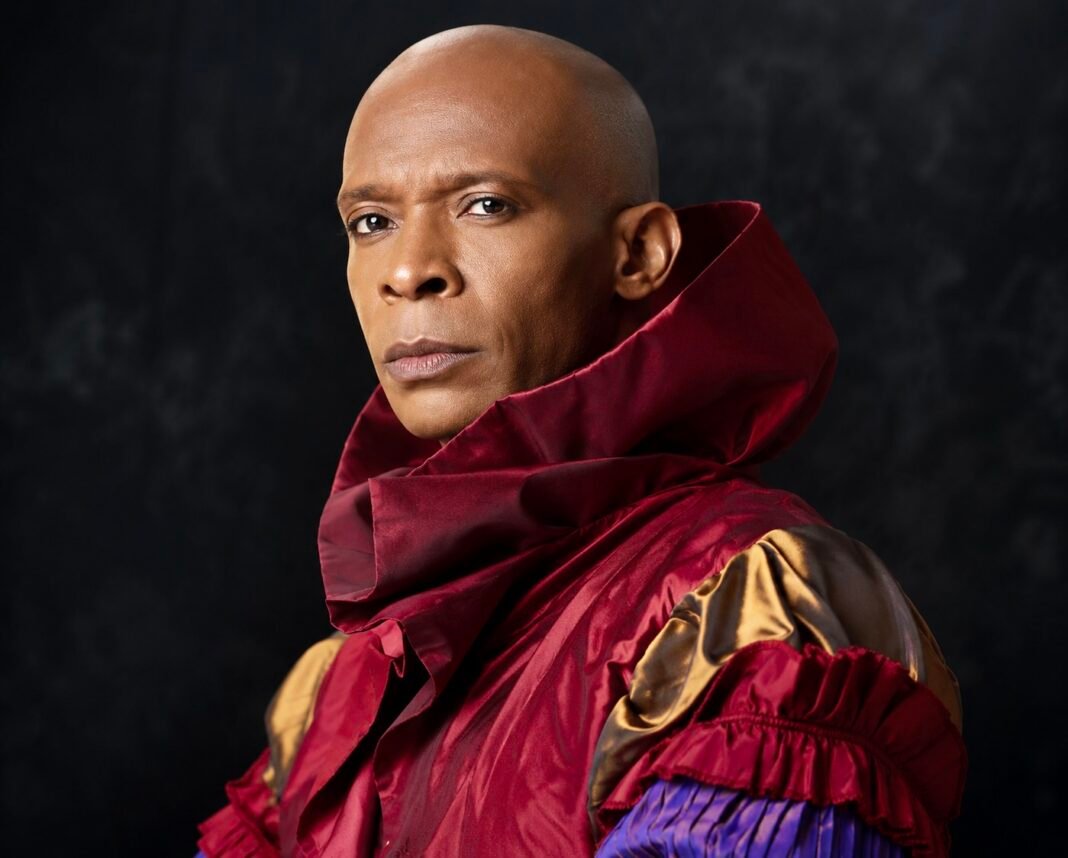
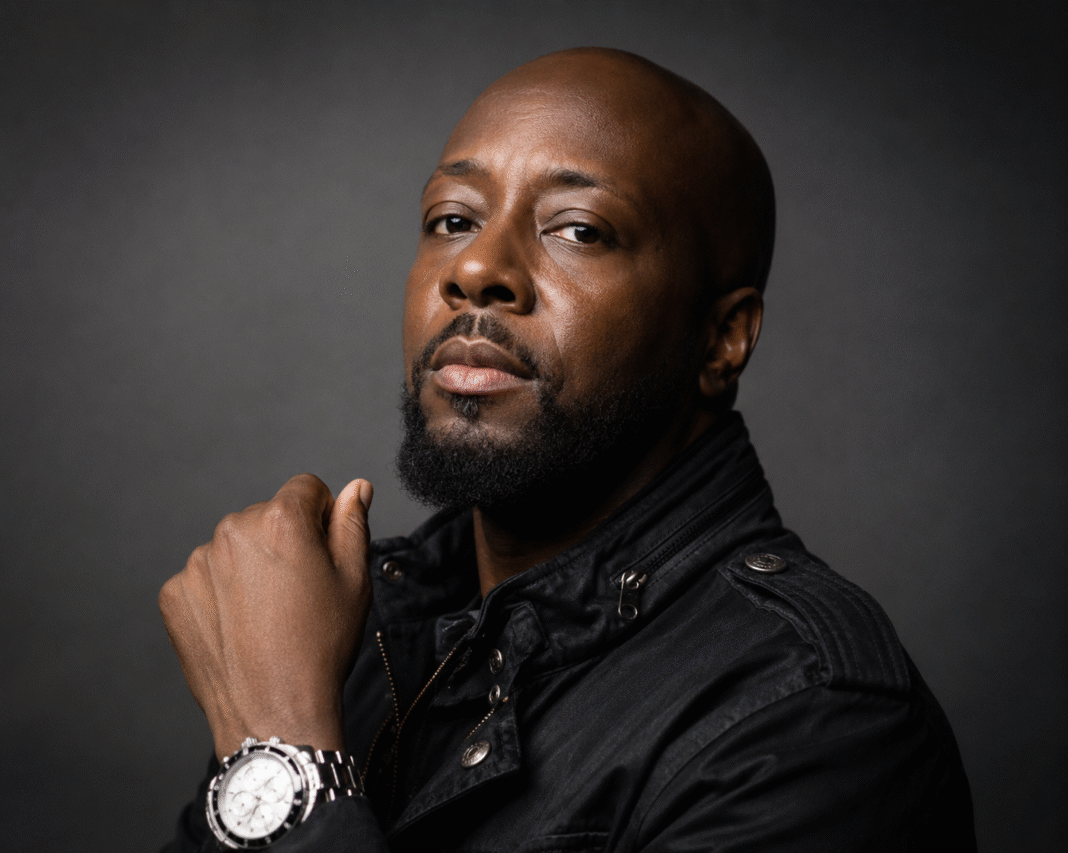
The Haitian global icon introduces “Rara Jazz” and brings together an extraordinary international cast of musicians, including a powerful Haitian collaboration on “Toussaint Louverture”
After more than three decades of moving effortlessly between hip-hop, Caribbean music, pop, reggae, R&B and global sounds, Wyclef Jean is entering another musical territory—jazz.
The Grammy Award-winning Haitian artist, songwriter, producer and composer released Q Theory on Friday, August 28, the second installment of his ambitious seven-volume Quantum Leap project and the first strictly jazz album of his career.
Released through Megaforce and The Orchard, Q Theory represents much more than Wyclef experimenting with another genre. Approximately 90 percent of the album is instrumental, placing musicianship, composition, improvisation and rhythm at the center of the project.
More significantly for Haitian music, Wyclef is using the album to introduce what he describes as “Rara Jazz”—a musical concept bringing the rhythmic and cultural spirit of Haiti and the Caribbean into conversation with jazz improvisation and a much broader global musical vocabulary.
It is an intriguing development from an artist whose career has largely been defined by refusing to accept musical borders.
A Tribute to Quincy Jones
The title Q Theory carries special meaning.
The “Q” honors the late legendary producer, composer and arranger Quincy Jones, whom Wyclef has described as one of his important musical mentors. Jones once introduced Wyclef at Switzerland’s prestigious Montreux Jazz Festival, creating a connection between Wyclef and the jazz world long before the release of this album.
That influence can be understood in the larger philosophy behind Q Theory.
Like Jones, Wyclef has spent much of his career treating genres as starting points rather than limitations.
Hip-hop can meet Caribbean rhythms. Jazz can communicate with African percussion. Haitian musical traditions can coexist with Latin music, funk, soul and contemporary production.
On Q Theory, those ideas become the foundation rather than an occasional experiment.
The result is Wyclef attempting to reinterpret jazz through his own multicultural musical experience.
Welcome to “Rara Jazz”
Perhaps the most significant idea emerging from Q Theory is Wyclef’s introduction of Rara Jazz.
For Haitian listeners, the word “Rara” immediately carries cultural weight.
Rara is deeply rooted in Haitian communal life, spirituality, percussion and street procession traditions. Its rhythmic language has traveled through generations and remains one of Haiti’s most recognizable cultural expressions.
Jazz, meanwhile, is built around improvisation, individual expression and musical conversation.
Bringing those worlds together opens fascinating possibilities.
But Q Theory does not stop with Haiti.
The album draws inspiration from musical traditions across the Caribbean, Latin America, Africa and the Middle East, creating what feels less like conventional jazz fusion and more like a global musical dialogue.
That approach is consistent with Wyclef’s entire career.
He has never seemed particularly interested in asking where one genre ends and another begins.
Instead, he asks what happens when they meet.
An Extraordinary International Ensemble
Wyclef surrounded himself with serious musicians for the experiment.
The collaborators appearing throughout Q Theory include acclaimed pianist Robert Glasper, legendary drummer Harvey Mason, British drummer Yussef Dayes, trumpeter Theo Croker, flutist Elena Pinderhughes, vocalist Nila, percussionist Weedie Braimah, pianist Axel Tosca, saxophonist Godwin Louis, trumpeter Jean Caze, keyboardist Mushy G. Widmaier, vocalist and percussionist Yiyi Sánchez, and numerous other musicians.
The lineup matters because Q Theory depends heavily on instrumental performance.
With vocals playing a comparatively limited role, Wyclef allows musicians to carry much of the narrative.
Piano, trumpet, saxophone, flute, drums, percussion and keyboards become voices themselves.
For an artist whose international recognition was largely built around songwriting, production and vocal performance, allowing instrumental composition to dominate represents a significant artistic choice.
It also gives listeners an opportunity to encounter another side of Wyclef Jean: the musician and composer behind the celebrity.
Nine Tracks, One Global Journey
Across its nine compositions, Q Theory moves geographically and stylistically.
“Rocinha,” featuring Robert Glasper, Godwin Louis and Patrick Pelissier, begins the journey, while “Lady Havana” brings together Yussef Dayes, Theo Croker, Yiyi Sánchez and Axel Tosca.
“Silk & Sand” features Jean Caze, Godwin Louis, Weedie Braimah and Axel Tosca, while “French Quarter” assembles Harvey Mason, Robert Glasper, Nila and Theo Croker.
“Pegasus” pairs Yussef Dayes with Bradford Hayes.
“Farafina” features Robert Glasper, Elena Pinderhughes, Godwin Louis and Arden Altino, while “Sugarcane & Watermelon” brings together Harvey Mason, Weedie Braimah and Godwin Louis.
“Harlem Nights” features Godwin Louis, Axel Tosca, Melky Jean, Patrick Pelissier, Emanuel Najee and Emmanuel Laine.
And then comes a composition of particular significance to Haitian audiences:
“Toussaint Louverture.”
“Toussaint Louverture”: Haiti Steps to the Center
If Q Theory is Wyclef’s global musical journey, “Toussaint Louverture” is where Haiti’s history assumes an unmistakable position within it.
The composition brings Wyclef together with an impressive collection of musicians: Mushy Widmaier, Dadi Beaubrun, Jean Caze, Papa Jube, Emmanuel Laine and Weedie Braimah.
Naming the piece after Toussaint Louverture immediately gives the composition historical weight.
Louverture remains one of the towering figures of Haitian and world history. His leadership during the Haitian Revolution helped transform a rebellion against slavery in Saint-Domingue into a revolutionary movement whose consequences reshaped the Atlantic world and ultimately contributed to the creation of independent Haiti in 1804.
More than two centuries later, Toussaint’s name remains associated with resistance, leadership, freedom and Black self-determination.
For Wyclef to place that name inside his first jazz album is therefore more than a creative title.
It connects contemporary Haitian musicianship with revolutionary memory.
Haitian Masters Meet Across Generations
The musicians assembled for “Toussaint Louverture” make the composition particularly noteworthy for HMI Magazine.
Mushy Widmaier, performing Fender Rhodes and conch shell on the project, represents decades of sophisticated Haitian musicianship. His work has helped demonstrate how naturally Haitian musical vocabulary can interact with jazz harmony and improvisation.
Dadi Beaubrun brings another important musical lineage. The Beaubrun family has played a major role in the development and international visibility of Haitian roots music, creating an important bridge between ancestral traditions and contemporary expression.
Trumpeter Jean Caze represents yet another generation. His ability to move between jazz and Haitian musical influences makes his participation especially appropriate for an album built around the concept of Rara Jazz.
Papa Jube and Emmanuel Laine contribute additional dimensions to the collaboration, while Weedie Braimah’s mastery of West African percussion strengthens the ancestral connection between Haiti, Africa and the wider diaspora.
Together, these musicians create something larger than a collection of featured guests.
They create a musical conversation.
Africa speaks to Haiti.
Haiti speaks to jazz.
Jazz speaks to the Caribbean.
And history speaks to the present.
From Toussaint Louverture to Wyclef Jean
There is considerable symbolism in Haitian musicians creating an instrumental work carrying Toussaint Louverture’s name.
The Haitian Revolution fundamentally altered world history, yet Haiti’s revolutionary legacy and its artistic contributions are frequently discussed as separate subjects.
Music can reconnect them.
Rhythm carries memory.
Improvisation represents possibility.
Percussion carries ancestral languages across generations.
And musicians collaborating freely across genres can become an artistic reflection of the freedom represented by the composition’s title.
In that sense, “Toussaint Louverture” fits perfectly within Wyclef’s concept of Rara Jazz.
It does not preserve Haitian history behind museum glass.
It allows that history to move.
Quantum Leap
: Seven Albums, Seven Musical Worlds
Q Theory is only the second stage of a considerably larger undertaking.
Wyclef’s Quantum Leap project is planned as a sequence of seven albums exploring different musical worlds over the course of approximately a year.
The first installment, Clef Notes, returned Wyclef toward his hip-hop foundations and included collaborations with artists such as Lil Wayne, Andra Day, G Herbo, Rapsody and Theo Croker.
With Volume Two, Wyclef moves into jazz.
Future volumes are expected to explore reggae, gospel, country, R&B and global musical traditions, including Haitian Konpa and other sounds.
The concept essentially functions as a musical autobiography told through genres.
Rather than creating a conventional retrospective collection, Wyclef appears to be revisiting the musical languages that have shaped him and creating new material within each one.
For an artist whose career has always resisted simple categorization, the concept makes sense.
Thirty Years of Crossing Musical Borders
There is also historical symmetry to the timing.
Nearly three decades ago, Wyclef’s solo debut The Carnival demonstrated that hip-hop did not have to remain within narrow stylistic boundaries.
The album moved through Caribbean, Latin, folk, soul and other influences at a time when the kind of cross-cultural collaborations now common in mainstream popular music were considerably less routine.
His work with the Fugees, particularly the enormously influential The Score, similarly helped establish him as part of one of the defining groups of 1990s hip-hop.
As a songwriter and producer, his musical fingerprints would later appear across recordings associated with artists including Shakira, Santana, Whitney Houston, Destiny’s Child, Mary J. Blige and Lil Wayne.
Crossing musical borders, therefore, is not a new direction for Wyclef.
It is arguably the central theme of his career.
What has changed with Q Theory is the format.
This time, rather than inserting global sounds into pop or hip-hop structures, he places musicianship and instrumental exploration directly in the foreground.
HMI MAGAZINE ANALYSIS: WHY
Q THEORY
MATTERS FOR HAITIAN MUSIC
For HMI Magazine, Q Theory deserves attention beyond the fact that a Haitian-born global superstar has released a jazz record.
The more interesting development is Rara Jazz.
Haitian music has never lacked sophisticated musicianship. What it has sometimes lacked internationally is sufficiently broad recognition of that sophistication.
Too often, Haitian music is reduced outside the community to a small number of genres or rhythms.
But Haiti’s musical universe is much larger.
Konpa, Rara, Racine, jazz, Vodou ceremonial rhythms, troubadour traditions, funk, rock, gospel and contemporary diasporic music have continually influenced one another.
Musicians such as Mushy Widmaier and Jean Caze have long demonstrated that Haitian musical vocabulary belongs comfortably within sophisticated jazz environments.
By attaching his international profile to the idea of Rara Jazz, Wyclef has an opportunity to expose that musical conversation to a much wider audience.
The challenge will be ensuring that Rara Jazz develops beyond a label.
For the concept to become genuinely important, its Haitian rhythmic foundations must remain identifiable and meaningful rather than simply becoming another description for generic world-music fusion.
If Wyclef and his collaborators accomplish that, Q Theory could open an interesting new chapter in the international presentation of Haitian music.
“Toussaint Louverture” Makes the Statement Personal
Among an album filled with international collaborations, “Toussaint Louverture” carries particular emotional and cultural importance.
It reminds listeners where Wyclef comes from.
For more than 30 years, Wyclef Jean has operated between Haiti and the international music industry. From the Fugees and The Carnival to production for global superstars, his career has repeatedly placed Haitian identity inside musical spaces where it historically received limited visibility.
On “Toussaint Louverture,” that relationship becomes explicit.
The title carries history.
The musicians carry generations of knowledge.
The percussion carries Africa.
The improvisation carries freedom.
And Wyclef provides the international platform connecting those elements.
It is not simply Wyclef Jean featuring a group of Haitian musicians.
It is a collective cultural statement.
A NEW CHAPTER FOR WYCLEF—AND PERHAPS FOR RARA JAZZ
At this stage of his career, Wyclef Jean has little left to prove commercially.
That makes Q Theory particularly interesting.
Rather than relying entirely on the musical formulas that made him famous, he has chosen an overwhelmingly instrumental jazz project built around collaboration, cultural exchange and musicianship.
That is a creative risk worth recognizing.
Whether “Rara Jazz” ultimately develops into a lasting musical movement will depend on what comes after this album. But Q Theory establishes an intriguing foundation.
And “Toussaint Louverture” may be its most meaningful statement for Haitian listeners.
More than two centuries after Toussaint Louverture helped transform the course of world history, his name continues to travel beyond Haiti’s borders.
This time, it travels through Fender Rhodes, trumpet, conch shell, African percussion, improvisation and jazz.
From Port-au-Prince to Africa, from the Caribbean to Montreux, and from hip-hop to jazz, Wyclef Jean continues doing what he has done throughout his career:
connecting musical worlds that others might never think to place together.
With Q Theory, he gives that philosophy a new name.
Rara Jazz has arrived.
The internationally acclaimed Haitian artist has released “Toussaint Louverture,” a major collaborative recording featuring an impressive lineup of musicians: Mushy Widmaier, Dadi Beaubrun, Jean Caze, Papa Jube, Emmanuel Laine and Weedie Braimah.
The track appears as part of Q Theory – Quantum Leap, Vol., bringing together musicians whose backgrounds cross generations, genres and musical traditions.
For HMI Magazine, the importance of “Toussaint Louverture” goes beyond the names attached to the recording. It represents something Haitian music has always done exceptionally well: transforming history into sound.
A Name That Carries the Weight of History
Choosing Toussaint Louverture as the title immediately gives the project historical and cultural significance.
Louverture remains one of the towering figures of Haitian and world history. His leadership during the Haitian Revolution helped transform an uprising of enslaved people in Saint-Domingue into a revolutionary movement that would ultimately lead Haiti toward independence and forever challenge the institution of slavery in the Atlantic world.
More than two centuries later, his name continues to symbolize leadership, resistance, intelligence, freedom and Black self-determination.
By placing that name at the center of a contemporary musical work, Wyclef Jean and his collaborators connect today’s Haitian artistic generation with the revolutionary history that preceded it.
It is a reminder that Haitian music does not exist separately from Haitian history.
The two have always spoken to each other.
Wyclef Brings Together a Remarkable Musical Team
The strength of “Toussaint Louverture” also comes from the musicians assembled around the project.
Wyclef Jean, whose career has consistently moved between hip-hop, Caribbean music, pop, roots music and global sounds, has spent decades bringing elements of his Haitian identity into international popular culture.
For this release, however, the collaborative lineup creates a particularly rich musical foundation.
Mushy Widmaier brings decades of experience and a sophisticated musical vocabulary deeply connected to Haitian jazz and contemporary Haitian music. Widmaier’s presence alone connects the project to an important generation of Haitian musicians who have continuously expanded the harmonic possibilities of the country’s music.
Dadi Beaubrun carries another major Haitian musical lineage. The Beaubrun name is inseparable from the evolution of modern Haitian roots music, and his participation strengthens the recording’s connection between tradition and contemporary experimentation.
Trumpeter Jean Caze contributes yet another dimension. Known for bringing Haitian influences into jazz, Caze represents a generation of musicians capable of moving comfortably between Haiti’s musical language and the broader international jazz world.
Papa Jube adds his own creative perspective to the collaboration, while Emmanuel Laine contributes to a collective whose musical identity extends well beyond any single genre.
The presence of percussionist Weedie Braimah further expands the project’s musical geography. His command of West African percussion traditions creates an important connection to the African foundations that remain deeply embedded in Haitian culture and music.
Together, these artists form more than a collection of individual musicians.
They create a conversation between Haiti, Africa, jazz, roots music, contemporary production and the diaspora.
More Than a Celebrity Collaboration
It would be easy to market a project like this simply by emphasizing Wyclef Jean’s international reputation.
But doing so would miss what makes the collaboration interesting.
“Toussaint Louverture” brings musicians with different musical histories into the same creative space. Some come from jazz. Others carry strong connections to Haitian roots traditions, contemporary music, percussion or global fusion.
That diversity reflects Haiti itself.
Haitian music has never developed in isolation. African rhythms, Indigenous memory, European influences, Caribbean exchanges, jazz, funk, rock, soul, hip-hop and generations of Haitian innovation have continuously interacted with one another.
A project featuring Wyclef Jean alongside musicians such as Mushy Widmaier, Dadi Beaubrun and Jean Caze therefore represents an important meeting of musical worlds.
It also demonstrates the value of collaboration across generations.
Instead of treating Haitian musical history as something preserved behind glass, these artists are allowing it to remain alive, experimental and contemporary.
From Revolution to Rhythm
There is something especially appropriate about Haitian musicians creating music around Toussaint Louverture.
The Haitian Revolution changed world history.
Yet Haiti’s cultural contribution to the world is sometimes separated from that revolutionary inheritance. Music provides a way of reconnecting the two.
Rhythm can carry memory.
Improvisation can represent freedom.
Percussion can connect generations separated by centuries.
And collaboration can demonstrate that a culture born through extraordinary resistance continues to create.
That gives “Toussaint Louverture” significance beyond the recording studio.
It becomes part of a much larger tradition of Haitian artists using music to preserve history while simultaneously reinventing it.
Wyclef Jean Continues to Bring Haiti Into Global Conversations
Throughout his career, Wyclef Jean has occupied a unique position between Haiti and the international music industry.
From his breakthrough with the Fugees to his solo career and numerous collaborations, Haiti has repeatedly surfaced in his music, public identity and creative projects.
His ability to move between Haitian culture and mainstream international music has helped introduce elements of Haiti’s sound and identity to listeners who might otherwise have little exposure to the country’s artistic traditions.
“Toussaint Louverture” continues that conversation, but with an important distinction: Wyclef is surrounded here by musicians capable of representing different dimensions of Haitian and African diasporic musical excellence.
The result is not simply Wyclef Jean featuring Haitian musicians.
It is a collective statement.
HMI MAGAZINE ANALYSIS: WHY THIS RELEASE MATTERS
For the Haitian music industry, collaborations of this nature deserve attention.
Haitian music possesses extraordinary musicianship, but too often its different communities operate independently—Konpa in one space, jazz in another, roots music somewhere else, while Haitian artists working internationally occupy still another world.
Projects such as “Toussaint Louverture” can break down those boundaries.
When internationally recognized artists collaborate with accomplished Haitian instrumentalists, composers and musicians, the result can introduce audiences to a much broader understanding of what “Haitian music” actually means.
It is not one rhythm.
It is not one generation.
And it is certainly not one genre.
The lineup assembled for “Toussaint Louverture” makes precisely that point.
A Musical Tribute With a Larger Message
The title carries history. The musicians bring pedigree. And the collaboration represents the continuing evolution of Haitian musical expression.
At a time when Haiti is frequently discussed internationally through the language of crisis, Haitian artists continue to provide another narrative—one built around creativity, history, excellence and cultural survival.
“Toussaint Louverture” fits naturally within that tradition.
Wyclef Jean, Mushy Widmaier, Dadi Beaubrun, Jean Caze, Papa Jube, Emmanuel Laine and Weedie Braimah have come together around the name of a revolutionary whose influence extends far beyond Haiti.
More than two centuries after Toussaint Louverture helped change the course of history, his name continues to travel.
This time, it travels through music.
And with “Toussaint Louverture,” a distinguished group of Haitian and African diasporic musicians reminds the world that Haiti’s revolutionary history still has a rhythm—and its musicians are still carrying it forward.