
HMI MAGAZINE | SPECIAL INVESTIGATIVE ANALYSIS
From the remarkable longevity of Orchestre Septentrional and Tropicana d’Haïti to the breakup of CaRiMi and the enduring partnership of the Martino brothers in T-Vice, an examination of leadership, family relationships, financial structures, artistic rivalries, and the historical challenges facing Haitian institutions.
By HMI Magazine Editorial Staff | November 2026
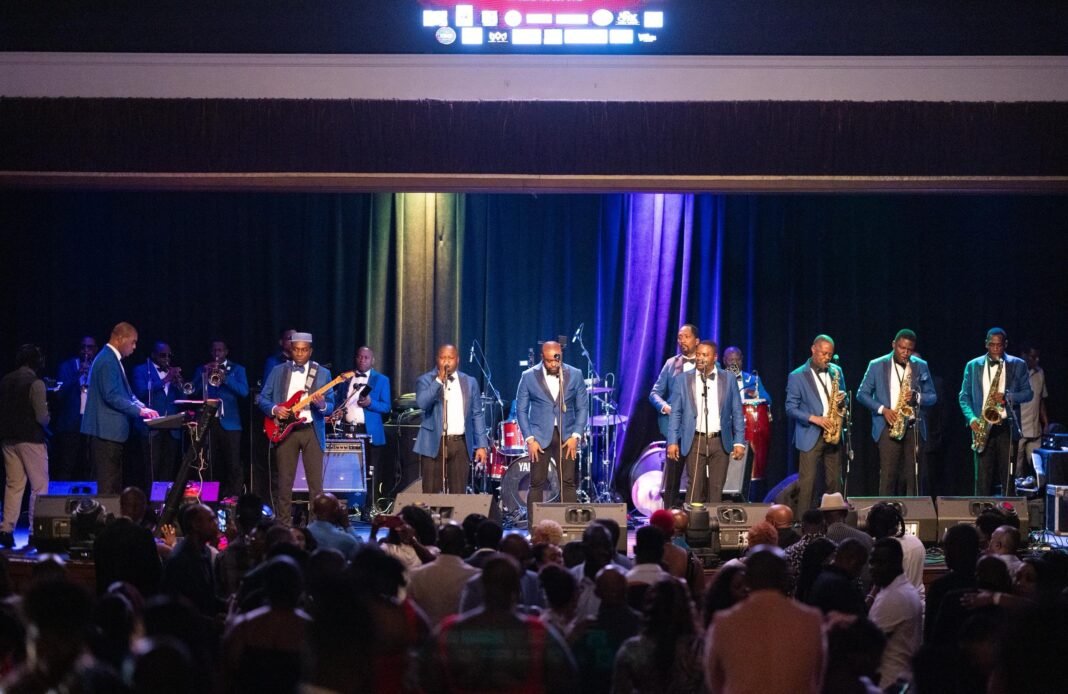
For more than seven decades, two musical institutions from northern Haiti have accomplished something extraordinary. Orchestre Septentrional and Orchestre Tropicana d’Haïti have endured changes in leadership, generations of musicians, political upheaval, economic hardship, migration, and the transformation of the international music industry.
Meanwhile, numerous celebrated Haitian bands have experienced painful separations, internal disagreements, personnel departures, or prolonged periods of inactivity.
The contrast raises a fundamental question: Why have Septentrional and Tropicana survived for so long when other Haitian musical groups, sometimes at the height of their popularity, have struggled to remain together?
The answer cannot be reduced to musical talent, personality, loyalty, or even financial success. It requires examining the organizational structures behind the music, the relationship between individual ambition and collective responsibility, and the wider social and economic environment in which Haitian musicians operate.
It also requires challenging an uncomfortable assumption: that Haitian bands break apart because Haitians are culturally incapable of maintaining unity.
That conclusion would be historically simplistic and unsupported by evidence. Haiti has produced institutions that have survived for generations, including these very orchestras. Their continued existence contradicts the idea that division is an unavoidable national characteristic.
There is another important distinction. The frequently repeated claim that 95 percent of Haitian bands eventually break up is not supported by a known comprehensive statistical study. Without a defined population of bands, a consistent definition of breakup, and reliable formation and dissolution dates, that percentage cannot responsibly be presented as fact.
Nevertheless, the number of highly visible separations in Haitian popular music makes the question worthy of serious investigation.
The two orchestras that became institutions
Orchestre Septentrional — founded July 27, 1948
78 years of history in 2026
Septentrional originated in Cap-Haïtien through the combination of musicians from Quatuor Septentrional and Trio Symphonia. It developed a distinctive orchestral sound and later its celebrated rythme de feu. Haiti Reference
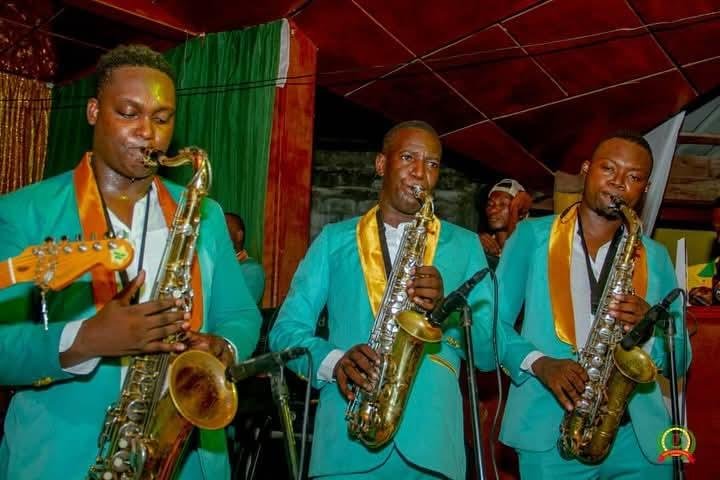
Orchestre Tropicana d’Haïti — founded August 15, 1963
63 years of history in 2026
Emerging from the earlier Orchestre Caraïbes, Tropicana developed its own musical identity in Cap-Haïtien, combining konpa with Caribbean and Latin influences. Ref. Ville du Cap-Haïtien
Their longevity is especially remarkable because neither orchestra has survived with an unchanged membership. Musicians have retired, departed, or died. Musical directors have changed. Audiences have aged, and new generations have discovered their music.
Yet the institutions have continued.
That distinction is fundamental. An orchestra can survive the departure of its founders when its identity, repertoire, and organizational purpose are larger than the individuals performing within it.
Septentrional’s history illustrates the principle particularly well. The orchestra survived the death of its longtime maestro Ulrick Pierre-Louis in 2009 and continued performing. Its catalog reportedly includes more than 600 recordings across over 70 albums, preserving a recognizable musical identity even as its personnel changed. Le Courrier de la Nation+1
The 2012 PBS documentary When the Drum Is Beating examined how Septentrional continued through dictatorships, coups, disasters, and social upheaval. The documentary portrayed the orchestra not merely as a performing group but as an institution closely connected to the history and resilience of Haitian society. PBS
Tropicana’s history reveals a different but equally important dimension of endurance. Its early years were marked by social barriers. Historical accounts describe an orchestra initially associated with less privileged audiences, operating in a musical environment where established institutions enjoyed greater prestige.
Rather than disappear, Tropicana developed its own following and eventually became one of Haiti’s most respected orchestras. Haitian Music Archive
Its organizational identity has also extended beyond performance. In 2023, a Haitian government report identified Augustin Antoine as president of the management council of the Fondation de l’Orchestre Tropicana d’Haïti, evidence of a formal institutional structure associated with the band. The existence of that foundation does not by itself prove why Tropicana has survived, but it demonstrates an approach to organizational continuity that deserves further study. Gouvernement de la République d’Haïti
These examples suggest several explanations for the two orchestras’ endurance.
Their musical brands are not dependent on one lead singer. Their repertoires belong to a continuing institution. Their identities are closely tied to Cap-Haïtien and to generations of listeners who regard them as part of the city’s cultural heritage.
They also emerged from an orchestral tradition in which the organization itself carried considerable authority. A musician could become famous within the orchestra without necessarily becoming synonymous with its entire existence.
However, longevity should not be confused with the absence of internal conflict. Neither Septentrional nor Tropicana has necessarily been free from disagreements, personnel disputes, or financial pressures.
The more meaningful observation is that their organizations have survived those challenges.
And there is an important limitation to this analysis: publicly available historical sources document their longevity far more thoroughly than their internal governance, financial arrangements, ownership agreements, or dispute-resolution procedures. Those factors should be examined through direct interviews and organizational records before claiming to know the precise formula behind their success.
The bands that separated, fragmented, or struggled to maintain their original lineups
The history of modern Haitian konpa offers numerous examples of successful musical partnerships that eventually changed direction.
But not all separations are equivalent. A complete dissolution differs from a founding member’s departure, a temporary suspension, or a band that continues under new leadership.
The following documented cases illustrate those distinctions.
| Band | Documented development | What happened |
|---|---|---|
| CaRiMi | Official breakup, 2016 | The original group dissolved after Mickaël Guirand announced he would no longer be available for performances. Its members later reunited for special concerts without permanently restoring the band. Dominica News Online+1 |
| Nu-Look | Major founding partnership ended, 2010 | Gazzman Pierre departed to establish Disip, while Arly Larivière continued Nu-Look. The original partnership ended, but the band survived. AllMusic |
| Djakout Mizik | Major split, around 2010 | A division produced separate formations associated with Djakout Mizik and Djakout #1, creating a lasting split within the band’s history. lenouvelliste.com |
| Enposib | Major departures and disruption | Four musicians departed in early 2019, followed by later uncertainty surrounding Medjy Toussaint’s participation. Its history includes restructuring, but a definitive permanent dissolution is not established by the reviewed evidence. lenouvelliste.com+1 |
| Zenglen | Departure of a principal musician, 2011 | Maestro Richie announced his departure after approximately 15 years. The band continued, while he pursued other musical activities. Le Floridien.com |
| T-Vice | Significant personnel split, 2015 | Several musicians departed during a turbulent period, contributing to the formation of DAT7. The Martino brothers retained the T-Vice identity. HMI Music |
CaRiMi provides perhaps the clearest example of a successful group whose original partnership became unsustainable.
The band had international recognition, an established repertoire, devoted fans, and substantial commercial appeal. Nevertheless, its members’ professional and personal priorities gradually became difficult to reconcile.
In later interviews, Carlo Vieux discussed the importance of family, the difficulties created by living in different locations, and disagreements surrounding demanding performance schedules. His account suggests that the separation cannot responsibly be reduced to a simple dispute over money or ego. haitienmarche.com
The band’s subsequent reunion performances demonstrate that ending a business partnership does not necessarily eliminate personal affection or musical chemistry.
Enposib presents another instructive case. Reporting by Le Nouvelliste documented the departure of several musicians in 2019 and the group’s efforts to reorganize. Later accounts raised questions about Medjy Toussaint’s participation, but some of the explanations circulating publicly were speculative. lenouvelliste.com+1
It would therefore be inaccurate to present every rumor about Enposib as established fact or to classify its entire history as a confirmed permanent breakup.
Nu-Look demonstrates the opposite possibility: a major partnership can end without destroying the organization. After Gazzman’s departure, Arly Larivière maintained the band’s name, repertoire, and performing identity.
The same principle applies to Zenglen and T-Vice. Their histories show that personnel turnover can be disruptive without necessarily becoming fatal.
The central distinction is between the survival of a partnership and the survival of an institution. Haitian music history contains examples of both failure and successful adaptation.
The Martino brothers: Why T-Vice has remained together for more than three decades

The history of T-Vice offers a particularly interesting comparison because its longevity is rooted in a different organizational model from Septentrional and Tropicana.
Founded in 1992 by brothers Roberto and Reynaldo Martino, T-Vice emerged from a family already deeply connected to Haitian music. Their father, Robert Martino, was an influential guitarist associated with Top Vice.
According to a 2025 historical account published by Le Nouvelliste, Roberto was 16 and Reynaldo 13 when they began developing T-Vice in the family basement in Morne Calvaire. Their early activities included school functions and private parties before the group expanded its presence internationally. lenouvelliste.com
Unlike bands formed through commercial recruitment, T-Vice began as a partnership between two brothers who shared a household, musical influences, and a family identity.
That background likely created a foundation of familiarity and mutual investment that extended beyond ordinary professional relationships.
However, it would be simplistic to conclude that the brothers remained together merely because they were related. Family businesses can experience severe conflicts, and siblings are not automatically better business partners than unrelated musicians.
The more convincing explanation combines family continuity with business discipline, artistic adaptation, and shared professional incentives.
In an interview with Haiti Open, Roberto Martino identified management, discipline, respect for fans, innovation, and an understanding of the market as important factors in T-Vice’s longevity. In another interview, he emphasized concentration and the ability to change with musical trends. Haiti Open, Inc.+1
Those statements provide stronger evidence than speculation about the brothers’ private personalities.
The Martinos appear to have maintained a durable partnership partly because their artistic identities and the T-Vice brand developed together. Neither brother’s professional history within the band can be separated easily from the other.
There is also an economic consideration. When musicians jointly establish a successful enterprise, preserving that enterprise may offer greater long-term benefits than dividing its reputation, audience, and business relationships.
That does not mean the brothers have never disagreed. No publicly available evidence establishes that their relationship has been free from conflict.
Indeed, T-Vice has experienced substantial personnel turnover. Its 2015 departures and the emergence of DAT7 demonstrate that the band’s history has included serious organizational challenges.
What remained intact was the central partnership.
This is where T-Vice differs from CaRiMi. CaRiMi’s identity was built around three prominent founding personalities who eventually developed separate professional directions. T-Vice’s continuing identity remains anchored in the Martino brothers.
The distinction suggests an important business principle: a stable leadership partnership can provide continuity even when the surrounding organization changes.
Yet the T-Vice example also raises a question that its founders will eventually face: Can the band survive beyond the brothers themselves?
If the answer is yes, its future may depend on adopting some of the institutional practices associated with Septentrional and Tropicana.
The Martinos have demonstrated how a family partnership can endure. The next challenge for any family-led musical enterprise is ensuring that its identity and operations can continue across generations.
Is the problem rooted in Haitian culture?
The question becomes more complicated when the discussion moves from musical organizations to Haitian society.
Haiti’s political history contains repeated episodes of division, contested authority, political violence, and institutional instability. These experiences have influenced the country’s development and deserve serious examination.
But the existence of political conflict does not establish that Haitians possess an inherent cultural tendency toward disunity.
Such a conclusion would confuse historical circumstances with national character.
The Haitian Revolution itself provides a powerful example of both cooperation and conflict.
The revolutionary struggle brought together leaders, soldiers, and communities with different backgrounds, interests, and political objectives. Despite those differences, the movement ultimately defeated French colonial rule and established Haiti’s independence on January 1, 1804.
That achievement required extraordinary collective organization.
Yet the new nation soon experienced profound political divisions.
On October 17, 1806, Jean-Jacques Dessalines, the principal military leader of independence and Haiti’s first head of state, was assassinated at Pont-Rouge.
Historical research by Carolyn Fick, published through the Bibliothèque nationale de France, identifies disputes involving land policy, political authority, economic control, and rival elite interests as important factors in the opposition to Dessalines. Patrimoines Partagés – France Amériques
His assassination was followed by a struggle for political power that contributed to Haiti’s division between northern and southern governments under Henry Christophe and Alexandre Pétion. 1
These events established an early historical example of how conflicts among political leaders could threaten the stability of a newly established institution.
However, the historical lesson is not that Haitians were incapable of unity. The revolution itself disproves that interpretation.
Rather, Haiti’s early history demonstrates the difficulty of transforming a successful military alliance into a stable political system.
The skills required to win independence were not identical to those required to establish durable institutions, distribute authority, manage economic interests, and resolve disagreements peacefully.
That distinction is relevant to musical organizations.
A group of talented musicians may unite around the ambition of becoming successful. They may share sacrifices, develop a distinctive sound, and establish a powerful public identity.
But once the band becomes commercially successful, new questions emerge.
Who owns the name? Who controls revenue? Who determines artistic direction? How are decisions made? What happens when a founder wants to leave? Can the organization continue without its most recognizable performer?
These are governance questions, not merely questions of friendship.
The comparison with Haiti’s political history is therefore useful as an institutional analogy, but it should not be mistaken for proof of a direct historical cause.
There is no credible evidence that Dessalines’ assassination created a psychological or cultural pattern that explains modern Haitian band breakups.
Nor would it be reasonable to attribute the dissolution of CaRiMi or the departure of musicians from Nu-Look to events that occurred more than two centuries earlier.
The stronger connection lies in the importance of institutions capable of managing competing interests.
Haiti’s economic and political conditions also matter
Haitian musical organizations do not operate independently of the country’s economic circumstances.
Political instability, insecurity, migration, limited financial infrastructure, and disruptions to domestic entertainment have created additional difficulties for musicians and promoters.
Bands whose members live in different countries face substantial expenses associated with travel, rehearsals, immigration requirements, accommodations, and equipment transportation.
These challenges can become especially difficult when musicians depend on frequent live performances for income.
A band may have an enthusiastic audience and an impressive catalog yet struggle to maintain sufficient revenue to support its members consistently.
Financial pressure can intensify disagreements over compensation, management fees, performance schedules, and the distribution of profits.
However, the economic environment does not affect every band equally.
Established organizations with recognizable brands, longstanding audiences, and diversified business relationships may be better positioned to absorb temporary disruptions.
Newer groups, particularly those built around a small number of highly visible performers, may have fewer resources to manage extended periods without concerts.
This helps explain why the survival of Septentrional and Tropicana is so significant. Their longevity reflects an ability to preserve organizational identity across periods of national hardship.
It does not mean they have been immune to the consequences of those hardships.
The dangers of personality-driven musical organizations
One of the most important distinctions in the Haitian music industry is the difference between a band built around a shared institution and one built around a dominant personality.
Neither model is inherently wrong.
A charismatic singer or exceptionally talented composer can help establish a band quickly, attract promoters, and develop a loyal following.
But the model becomes vulnerable when the individual’s professional interests no longer align with those of the organization.
A lead singer may believe that a solo career offers greater artistic freedom or financial opportunity. A composer may want more control over recordings. A manager may prioritize frequent bookings while musicians seek additional time for family or creative work.
Without clear agreements, these competing interests can become personal conflicts.
A band whose identity depends overwhelmingly on one individual may struggle when that person leaves.
By contrast, an institution with a recognizable repertoire, established leadership procedures, and a strong collective identity may have more flexibility to introduce new performers.
This helps explain the different outcomes following major departures from CaRiMi, Nu-Look, and T-Vice.
CaRiMi’s original partnership ended. Nu-Look continued under Arly Larivière. T-Vice retained its founding leadership despite changes elsewhere in the lineup.
Septentrional and Tropicana have continued across multiple generations of performers.
These examples suggest that organizational continuity is not simply a function of how long musicians have known one another.
It depends on whether the band has developed an identity and operating structure capable of surviving changes in personnel.
What the Haitian music industry can learn
The solutions are neither mysterious nor unique to Haiti. They are familiar principles of organizational management that should be adapted to the realities of Haitian music.
First, bands should establish written agreements before achieving significant commercial success. These agreements should identify ownership interests, financial responsibilities, decision-making authority, intellectual property rights, and procedures for admitting or removing members.
Second, the band’s financial operations should be separated from the personal finances of individual musicians or managers. Clear accounting procedures, regular financial reporting, and appropriate oversight can reduce misunderstandings and protect everyone involved.
Third, bands need reliable methods for resolving disagreements. An independent mediator or agreed dispute-resolution procedure can help prevent ordinary professional conflicts from becoming permanent personal divisions.
Fourth, musical organizations should establish realistic performance schedules. Touring can be physically demanding, and musicians need adequate time for family responsibilities, rest, and creative development.
Fifth, bands should develop succession plans. The departure of a lead singer, musical director, or founding member should not automatically threaten the organization’s existence.
Finally, the industry needs stronger professional associations capable of providing education, legal resources, financial guidance, and institutional support.
These recommendations are especially important because the Haitian music industry has become increasingly international.
Bands now operate across several countries, often navigating different legal systems, contractual obligations, and business environments.
Professional management should no longer be treated as a luxury reserved for the most commercially successful groups.
It is a necessary foundation for long-term stability.
A proposal for a more sustainable Haitian music industry
HMI Magazine believes the historical experiences examined in this report support the development of a voluntary Haitian Music Industry Governance and Sustainability Initiative.
Such an initiative could bring together experienced bandleaders, musicians, managers, entertainment attorneys, accountants, producers, and cultural organizations to develop practical standards for the industry.
Its purpose would not be to interfere with artistic independence. Rather, it would help musicians protect their work, resolve disagreements, and establish organizations capable of surviving changes in leadership.
A practical program could include standardized band partnership agreements, financial-management workshops, mediation services, professional-development programs, and assistance with succession planning.
It could also support the systematic documentation of Haitian musical history, preserving the experiences of longstanding organizations such as Septentrional and Tropicana.
Perhaps most importantly, it could establish a reliable research database documenting when Haitian bands were formed, how their memberships changed, whether they remained active, and the circumstances surrounding their separations.
Such research would allow the industry to move beyond unsupported estimates about breakup rates and begin examining the actual factors associated with longevity.
For example, researchers could compare bands with written ownership agreements against those operating through informal arrangements, or examine whether groups with professional management experience fewer organizational disruptions.
The resulting evidence would provide a stronger foundation for recommendations than rumors, personal accusations, or generalized judgments about Haitian culture.
Conclusion: Haiti does not lack unity; its institutions need protection
The enduring histories of Septentrional, Tropicana, and T-Vice challenge the assumption that Haitian musical partnerships are destined to fail.
These organizations have demonstrated that musicians can work together for decades, maintain successful brands, and preserve cultural traditions despite considerable challenges.
Their experiences also reveal that there is no single formula for longevity.
Septentrional and Tropicana represent multigenerational institutions whose identities have survived changes in membership and leadership.
T-Vice represents a durable family partnership supported by business awareness, artistic adaptability, and a shared professional identity.
CaRiMi illustrates how even an exceptionally successful musical partnership can become unsustainable when personal priorities and professional demands can no longer be reconciled.
Nu-Look demonstrates that a band may survive the departure of a founding partner, while Enposib’s history illustrates the challenges of restructuring amid changes in personnel.
None of these cases supports the conclusion that Haitians are inherently unable to cooperate.
Haiti’s history contains profound examples of both unity and division. Its revolution demonstrated extraordinary collective achievement, while the political conflicts that followed independence exposed the difficulties of establishing durable governance.
The lesson for the music industry is not that contemporary musicians have inherited the conflicts of their ancestors.
It is that collective success must eventually be supported by institutions strong enough to manage individual differences.
Haitian musicians have repeatedly demonstrated that they possess the talent, creativity, and determination necessary to achieve international recognition.
The challenge is ensuring that their organizations are equally capable of enduring.
That requires professionalism without sacrificing artistic freedom, accountability without destroying friendship, and leadership that recognizes the difference between personal authority and institutional responsibility.
The success of a musical group should not depend entirely on whether its members agree with one another every day. It should depend on whether they have established a fair and reliable process for managing the days when they do not.
Septentrional and Tropicana have already demonstrated that Haitian musical institutions can outlive generations of performers.
The Martino brothers have shown that a family partnership can remain commercially and artistically active for more than three decades.
The next step is to make such longevity less exceptional.
Haiti’s musical future should not depend on finding musicians who never disagree. It should depend on building organizations that do not collapse when disagreements occur.
That may be the most valuable lesson of all.
Research and editorial note: This analysis draws on published historical records, interviews, music-industry reporting, PBS documentary material, and academic historical research. The conclusions concerning governance, business incentives, and institutional survival are HMI Magazine’s analysis, not findings from a controlled comparative study. The 95 percent breakup estimate has not been independently substantiated. No private band contracts, financial statements, or internal management records were reviewed.
Selected research sources